
Architectural Photography and the Art of Capturing Urban Spaces
A building does not exist in isolation. It occupies a street, a skyline, a neighbourhood, and a moment in time. Architectural photography that treats a structure as a standalone object, divorced from its urban context, produces images that are technically correct but visually incomplete. The most compelling architectural photographs communicate not just what a building looks like, but where it sits, how it relates to its surroundings, and what it contributes to the urban fabric around it.
Perspective Control in Urban Environments
Urban environments present perspective challenges that require both technical skill and deliberate planning. Buildings photographed from street level with a standard lens produce converging verticals that make structures appear to lean backward. In a dense city environment, the problem compounds: surrounding buildings, street furniture, overhead wires, and traffic all compete for space in the frame.
A professional architectural photographer working in urban environments uses tilt-shift lenses and precise camera positioning to keep vertical lines true without requiring heavy post-production correction.
As Adobe’s guide to tilt-shift photography explains, shifting the lens allows the photographer to capture a building the way it was designed to be viewed, with perfectly parallel vertical lines, without distorting proportions.
Timing and Light in the Urban Context
Urban architectural photography is a discipline built around timing as much as technique. The quality of light at different times of day fundamentally changes how a building reads in a photograph. Early morning light rakes across facades and reveals texture. Midday sun can flatten surfaces and create harsh shadows.
The blue hour, that narrow window after sunset when ambient light and artificial illumination briefly balance, is one of the most sought-after conditions for photographing commercial and mixed-use buildings that come alive with interior lighting after dark.
Choosing the right conditions also means accounting for the city itself. A wide pedestrian street photographed at rush hour tells a different story than the same street at dawn. For professional photography in Toronto, understanding how light moves through the city’s dense core at different seasons and times of day is knowledge that comes from sustained experience shooting in those specific urban conditions.
Environmental Context as a Design Asset
One of the most important decisions in professional architectural photography is how much context to include. A tight crop of a facade detail communicates material quality. A wider shot that places the building within its street context communicates urban presence and scale. Neither is wrong, but both require deliberate choices. The Architecture Photography Awards 2025 winners gallery demonstrates how the most recognized architectural images consistently use environmental context, shadow, and human scale to elevate a structure from a building into a visual statement.
For architects and developers building project portfolios, the relationship between a completed building and its urban setting is often the strongest argument for the quality of the design.
Supporting Portfolios, Publications, and Award Submissions
The images produced by a commercial and architectural photographer for a completed urban project serve multiple purposes simultaneously. They populate the architect’s portfolio, appear in developer marketing materials, and are submitted to publications, design awards, and professional bodies. The best architectural photographs go beyond documentation to capture the dialogue between a building and its environment, producing images that communicate design intent to audiences who may never visit the structure in person.
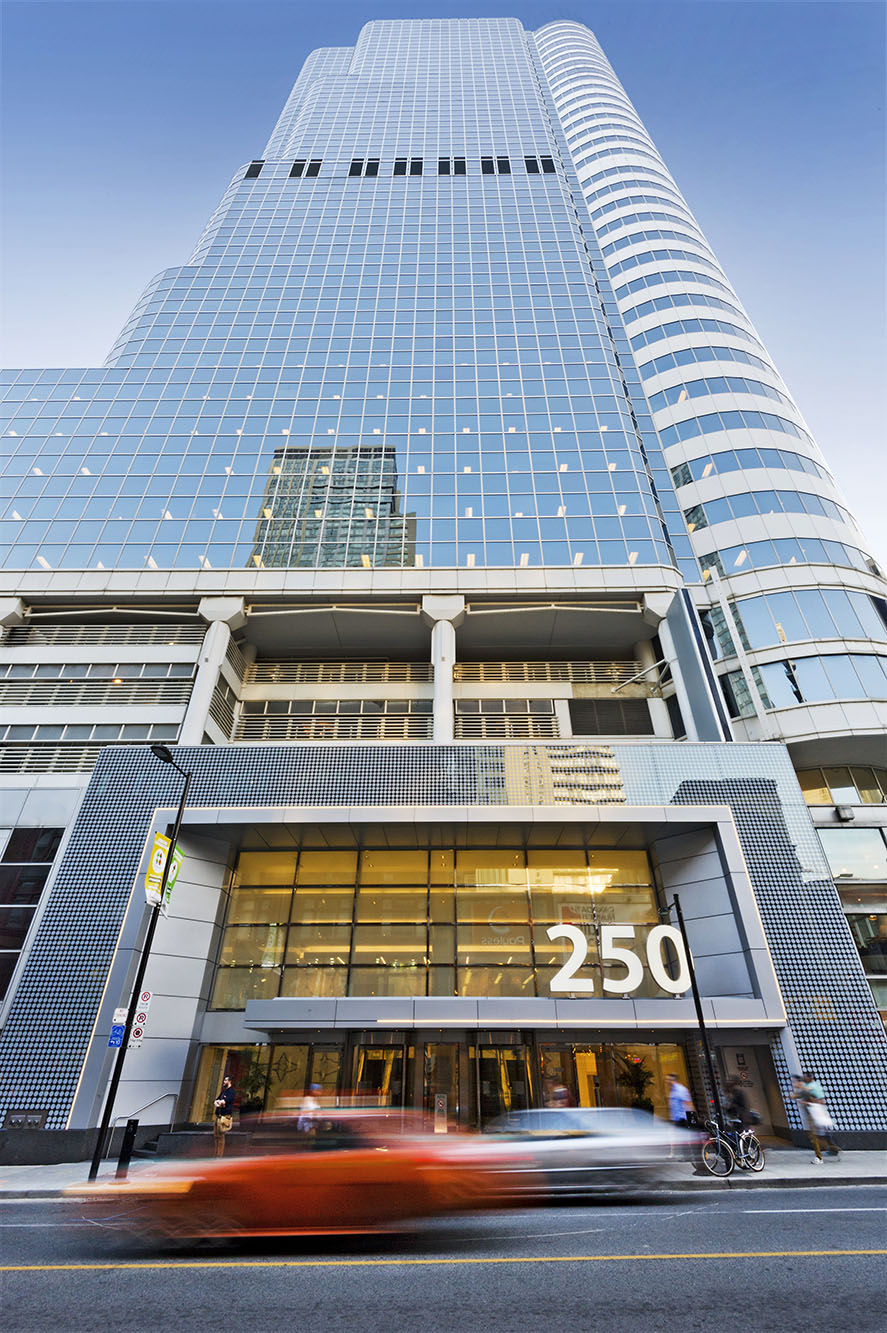
We Tell the Story of Every Building We Photograph
At Philip Castleton Photography, our architectural photography work spans commercial towers, mixed-use developments, and urban projects across Toronto and North America. Every assignment is approached with the same commitment to perspective, light, and context that turns a completed building into a portfolio-worthy image. Reach out to us to discuss your next project and receive a prompt quotation.
